
Behind the Lens: My Journey as a Producer and Cinematographer on Food Roots
A personal reflection on working as a producer and cinematographer on Food Roots, the award-winning documentary exploring Filipino identity, family, heritage, and the power of authentic storytelling.
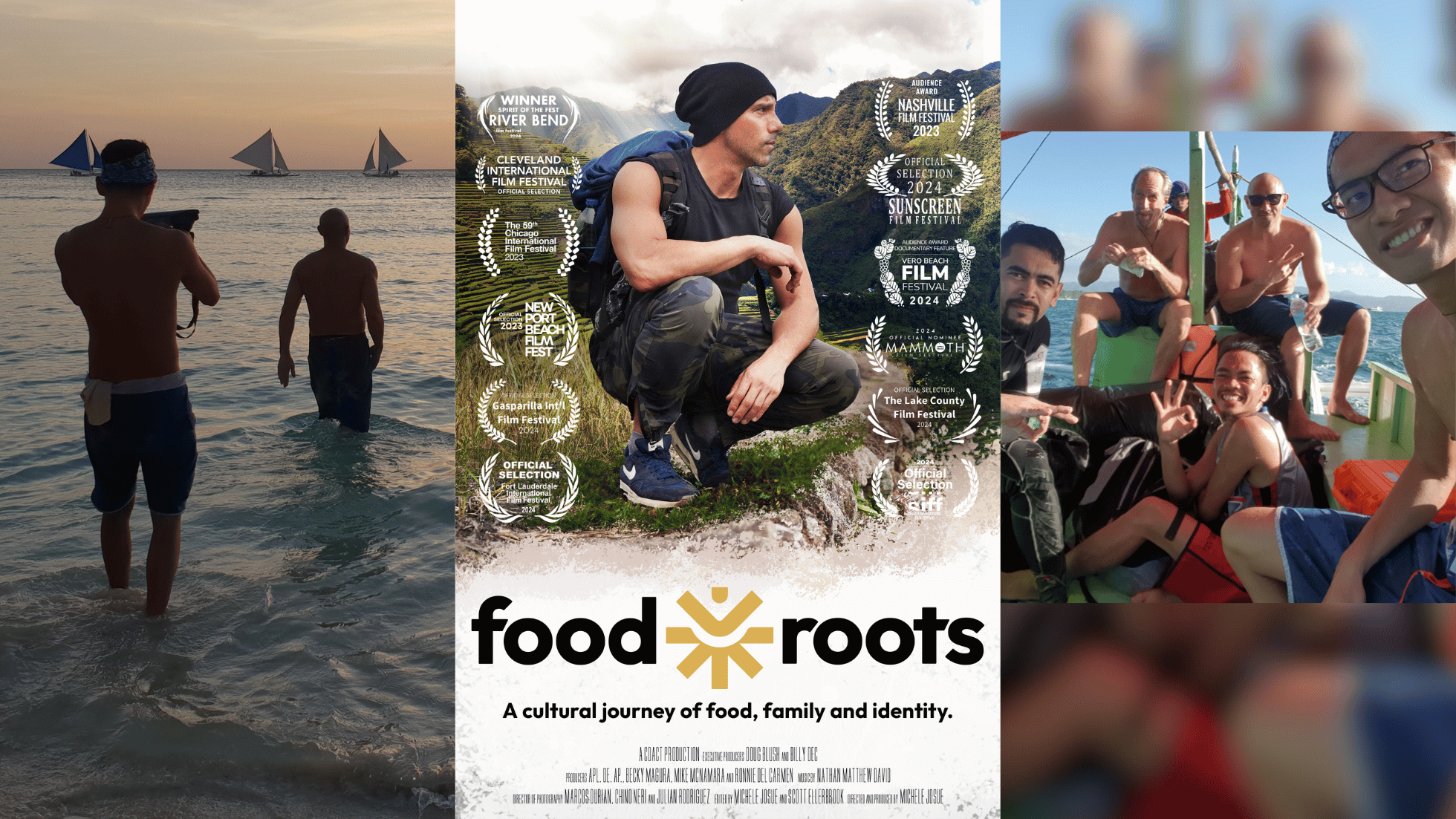
Written by Chino Neri
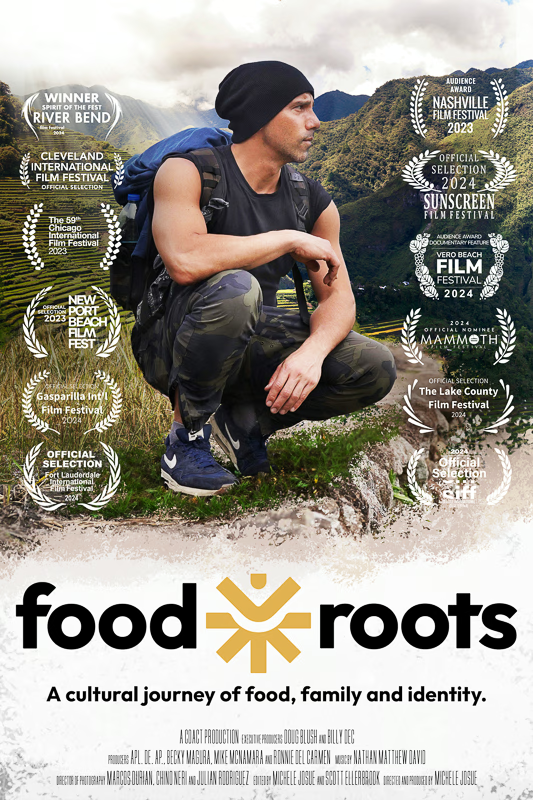
FOOD ROOTS follows Sunda New Asian founder Billy Dec as he journeys across his mother's native Philippines, seeking out his last living elders, learning ancestral recipes, and uncovering cultural treasures and family stories that help shape his understanding of identity and belonging.
The film brought together an incredible team, including three-time Oscar-winning Executive Producer Doug Blush (20 Feet from Stardom), Emmy Award-winning Director Michele Josue (Matt Shepard Is a Friend of Mine, Happy Jail), Grammy Award-winning artist apl.de.ap of the Black Eyed Peas, and COACT Agency.
Food Roots was an important part of my life.
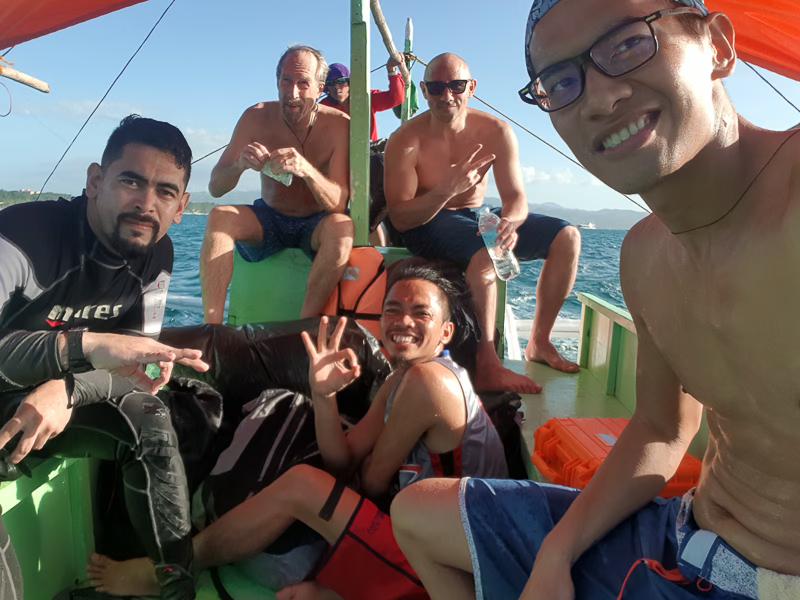
I had the opportunity to join the project as a local producer in the Philippines and as one of the cinematographers. Looking back, the project arrived at exactly the right time.
At the time, I was beginning to grow out of my advertising and corporate filmmaking season. While I was grateful for the experience, I was also feeling creatively burnt out. I found myself searching for projects that felt meaningful, stories that could create a deeper impact beyond simply producing commercial work.
I was looking for purpose and deeper meaning in my work.
A few years earlier, in 2016, I took a chance on a project called Lost and Found Journeyman, an independently produced adventure and environmental series that my friend Jules and I developed through the production company I co-founded. The project eventually brought us to the United States, where we connected with the Philippine Department of Tourism in Los Angeles.
That connection would eventually lead to an introduction to Billy Dec.
Not long after, I received a call from Richron Jimenez, who was helping organize a food tour throughout the Philippines for Filipino-American personalities. Billy was one of the participants.
The team was looking for a production crew who could document the experience, and because food, culture, and storytelling had always been interests of mine, I immediately said yes.
At the time, I thought we were simply documenting a food tour. What I didn't realize was that Billy had a much bigger vision.
That vision would eventually become Food Roots.
What I loved most about the project was that it wasn't just about food.
Food was the vehicle, but underneath it was a much deeper story about identity, family, belonging, and heritage.
Through Michele Josue's direction, the film became something far more intimate than a travel or food documentary. She was able to capture Billy's journey in a way that felt deeply human, exploring not only the flavors and traditions of the Philippines, but also the relationships, memories, and family connections that shape who we are.
Watching the final film reminded me that some of the most meaningful journeys aren't about discovering new places, but understanding where we come from.
While the film would eventually take nearly eight years to reach audiences, its impact on me wasn't measured by career milestones, recognition, or financial success.
Its impact was personal.
During that season of my life, I was navigating a major transition. I had already sold my shares in the production company I co-founded, spent much of my savings on travel and creative pursuits, and was trying to figure out what came next.
I wasn't sure where my career was headed.
I wasn't sure where life was headed.
What I did know was that I wanted to keep creating.
When Billy told me the film was moving forward, it gave me something I desperately needed at the time: direction.
It gave me hope.
It gave me purpose.
Over the years, the project also changed the way I viewed food.
One of the unexpected lessons Food Roots gave me was a deeper appreciation for where food comes from, families, traditions, and food preparation processes reminded me that food doesn't simply appear on a plate.
Behind every meal are people, histories, sacrifices, and generations of knowledge.
The experience encouraged me to become more mindful about what I consume, where it comes from, and the choices I make every day.
Rather than changing how I viewed Filipino food, it deepened my respect for it.
I came away with a greater appreciation for the cultural significance of food, the stories it carries, and the role it plays in bringing people together.
The project also inspired me to be more intentional about my own health and lifestyle. It encouraged me to think more carefully about nourishment, conscious consumption, and the connection between personal wellbeing and the food systems that support us.
Billy himself had a significant impact on me.
Traveling and working alongside him, I witnessed his commitment to excellence, his work ethic, and the genuine care he showed toward the people around him, especially his family.
That commitment is evident throughout the film and the entire process.
Food Roots is ultimately a story about family and connecting to our roots.
It's about preserving stories before they're lost.
It's about reconnecting with elders while we still can.
It's about understanding where we come from so we can better understand who we are.
The film also had a meaningful impact on my own family.
When Food Roots screened in the United States, many of my relatives attended the screenings. My aunts, uncles, and cousins came together to watch the film and celebrate its release. They had the opportunity to meet Billy, who graciously gave me a shoutout during one of the Q&A sessions. It was a simple gesture, but one that meant a great deal to me. Seeing my family come together through the film was incredibly special.


I received messages from relatives sharing how proud they were to see someone from our family contribute to a project that celebrated Filipino culture in such a thoughtful and meaningful way.
That alone made the journey worthwhile.
Today, Food Roots has gone on to resonate with audiences around the world, earning audience recognition at multiple film festivals, notability the Audience Award in the Nashville Film Festival (2023). I believe that's because its message is universal.
Regardless of where we're from, we're all searching for connection.
We're all trying to understand our stories.
We're all trying to find our way home.
In many ways, Food Roots impacted my life far beyond the film itself.
It introduced me to remarkable people, taught me valuable lessons about storytelling, food, family, and identity, and arrived during a season when I needed it most.
For that, I will always be grateful.
Thank you to Billy, Michele, the entire Food Roots team, and everyone who helped bring this beautiful story to life.
Related Article


Unit 6-A2, Valero One Center, 102 Valero St., Salcedo Village Makati City
media@cleanoceanmarketing.com